
There is a specific kind of frustration that comes from pulling a concrete vibrator out of freshly poured concrete and seeing air pockets and honeycombing in the surface. That frustration is almost always avoidable — and it almost always comes from using the wrong size vibrator, using it incorrectly, or not using one at all.
Concrete vibrator rental makes professional-grade vibration accessible for one-off pours without the $300–$2,000 purchase price of owning the equipment outright. For a weekend driveway pour, a foundation project, or a commercial slab, renting the right vibrator for the right duration is almost always the smarter financial decision.
But “rent a concrete vibrator” is not a simple transaction. The poker diameter, shaft length, power source, and frequency all need to match your specific pour — and rental companies carry multiple options that suit different jobs. Choosing the wrong one means either under-compacting the concrete (air pockets, reduced strength) or renting more machine than you need.
This guide covers everything: rental costs by size and type, where to rent, what size to choose for your project, and how to use it correctly once you have it in your hands.
For concrete volume calculations before your pour, use the free concrete calculator at ConcreteCal to get your cubic yards right before ordering.
Table of Contents
- Why Rent a Concrete Vibrator Instead of Buying?
- Types of Concrete Vibrators Available for Rental
- What Size Concrete Vibrator Do You Need?
- Concrete Vibrator Rental Cost — What to Expect
- Where to Rent a Concrete Vibrator
- How to Use a Rented Concrete Vibrator Correctly
- Concrete Vibrator Rental Checklist
- Frequently Asked Questions
Why Rent a Concrete Vibrator Instead of Buying?
The decision between renting and buying construction equipment almost always comes down to frequency of use and project scale. For concrete vibrators specifically, the math is unusually clear.
When Renting Makes Financial Sense
A decent electric concrete vibrator costs $300–$800. A gasoline-powered unit runs $600–$2,000. For a homeowner pouring a driveway once every ten years, that purchase price makes no sense — rental for $40–$100 per day delivers the same performance at a fraction of the cost.
Rent when:
- The project is a one-time pour or annual event
- Storage space for construction equipment is limited
- You want the most appropriate size for the specific project rather than a compromise size you own
- Maintenance, repair, and downtime risk are not your problem — the rental company handles that
Worked Example — Weekend Driveway Pour:
A homeowner pouring a 640 sq ft driveway in one day. Concrete volume: approximately 10 cubic yards, poured in one session. Equipment needed: 1.5-inch (38mm) electric vibrator for 6–8 hours. Rental cost: $55/day. Purchase cost of equivalent equipment: $450. Rental saves $395 on this one project — and the homeowner does not store or maintain equipment they will not use again for a decade.
When Buying Is the Better Choice
Buying makes sense when you pour concrete regularly — weekly or monthly — and when the same size machine suits most of your work. Contractors who pour 10+ times per year will typically recover the purchase cost within 6–12 months compared to rental rates.
The crossover point: if you rent the same size vibrator more than 8–12 times per year, the annualised purchase cost (including maintenance) is usually lower than cumulative rental cost.
Types of Concrete Vibrators Available for Rental
Not every rental company carries every type — but understanding what is available helps you ask for the right equipment and identify whether a particular shop can meet your needs.
Electric Concrete Vibrators
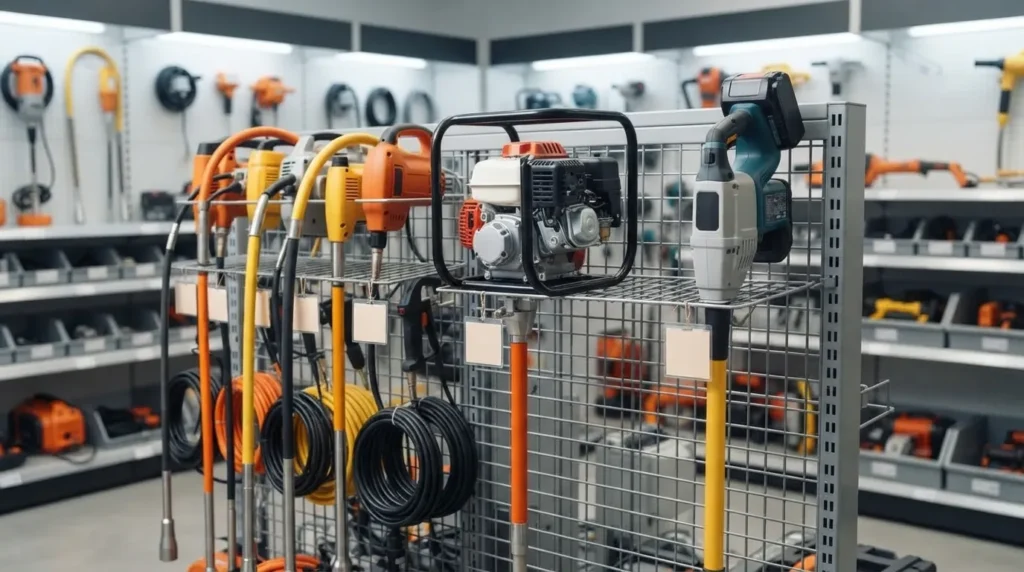
Electric vibrators — single-phase 220–240V models — are the most widely rented type for residential and light commercial work. They are quieter than gasoline models, require no fuel, and are suitable for indoor or enclosed pours where engine exhaust would be a problem.
Typical electric rental specs:
- Input power: 1,050W–1,600W
- Frequency: 200–300 Hz
- Poker diameter: 28mm–60mm
- Shaft length: 3m–6m
Best for: Residential slabs, columns, walls, basement pours, any indoor application.
Limitation: Requires a 240V power source within reach of the pour. On remote sites without power, an electric model is impractical.
Gasoline (Petrol) Concrete Vibrators
Gasoline-powered vibrators — with Honda or similar engines rated at 5.5HP or 6.5HP — are the choice for large pours, remote sites, or high-volume commercial work where a 240V power source is not reliably available.
Typical gasoline rental specs:
- Engine: 5.5HP or 6.5HP 4-stroke
- Frequency: 150–200 Hz
- Poker diameter: 38mm–60mm
- Shaft length: 5m–8m
Best for: Large commercial slabs, remote construction sites, road construction, any pour where electrical supply is uncertain.
Limitation: Heavier, noisier, requires fuel management, and exhaust makes them unsuitable for enclosed spaces without ventilation.
Cordless Lithium-Ion Vibrators
20V lithium-ion concrete vibrators are a newer category — battery-powered, lightweight, and genuinely useful for smaller pours where portability matters more than extended runtime.
Typical cordless rental specs:
- Battery: 20V lithium-ion (battery usually included in rental)
- Runtime: 45–90 minutes per charge
- Poker diameter: 28mm–38mm
- Weight: Significantly lighter than electric or gas models
Best for: Small residential pours, fence post footings, tight access areas, decorative concrete work where precise control matters.
Limitation: Runtime per charge limits them to smaller pours or projects where recharging during breaks is feasible. Not suitable for continuous large-volume pours.
High-Frequency Vibrators
High-frequency vibrators — operating at 300Hz+ rather than the standard 150–200Hz — are specialist equipment for low-slump concrete mixes and precast concrete production. They are less commonly stocked by general tool hire shops but available through specialist concrete equipment suppliers.
Best for: Precast concrete products, tilt-up panel construction, any pour using a stiff low-slump mix that requires more intensive vibration than standard equipment provides.
What Size Concrete Vibrator Do You Need?
Vibrator sizing is the most common area where rental customers make mistakes — either renting a poker too small for the pour depth or too large for the access conditions.
Poker (Head) Diameter Guide
The poker diameter determines two things: the radius of action (how far the vibration effectively consolidates concrete around the insertion point) and the minimum clearance required between the poker and formwork or reinforcement.
Rule of thumb for radius of action: Effective vibration radius = approximately 6× the poker diameter.
| Poker Diameter | Radius of Action | Insertion Spacing | Best Application |
|---|---|---|---|
| 25–28mm | ~150mm (6 inches) | 300mm (12 inches) | Thin sections, tight rebar, decorative |
| 35–38mm | ~215mm (8.5 inches) | 450mm (18 inches) | Residential slabs, columns |
| 45mm | ~270mm (10.5 inches) | 540mm (21 inches) | Commercial slabs, foundations |
| 50mm | ~300mm (12 inches) | 600mm (24 inches) | Large commercial, heavy infrastructure |
| 60–65mm | ~375mm (15 inches) | 750mm (30 inches) | Mass concrete, large walls |
Minimum clearance: The poker must maintain a minimum clearance of 50–75mm from any formwork or reinforcement bar. If rebar spacing is tight, a smaller poker diameter is required.
Shaft Length Selection
Shaft (hose) length determines how deep you can reach into the concrete. The poker must be able to penetrate to within 75–150mm of the bottom of the pour in a single insertion.
Standard shaft lengths available for rental: 3m, 4m, 5m, 6m.
For a slab pour: a 3m shaft is adequate for pours up to approximately 1m deep (the operator stands at the top, the poker reaches the bottom with 2m of shaft above the concrete surface). For wall pours and deep column pours, longer shafts are required.
Matching Vibrator to Pour Size
Worked Example — Residential Foundation Wall:
A basement perimeter wall, 8 feet (2.4m) tall, 10 inches thick, with standard #4 rebar on 12-inch centres.
- Wall thickness 10 inches, rebar on 12-inch centres → maximum poker diameter that fits between bars with 50mm clearance each side: approximately 38mm (1.5 inch) poker
- Wall height 2.4m → shaft length minimum 3.5m (poker at bottom + some shaft above concrete)
- Specification: 38mm poker, 4m shaft, electric 1,050W model
Concrete Vibrator Rental Cost — What to Expect
Rental rates vary by region, equipment type, and rental duration. The figures below are US market averages for 2025–2026.
Daily and Weekly Rental Rates
| Equipment Type | Daily Rate | Weekly Rate | Weekend Rate |
|---|---|---|---|
| Electric (small, 28–35mm) | $35–$55 | $120–$180 | $45–$70 |
| Electric (standard, 38–50mm) | $50–$80 | $160–$250 | $65–$100 |
| Electric (large, 60mm+) | $70–$110 | $220–$350 | $90–$140 |
| Gasoline (standard, 38–50mm) | $65–$100 | $200–$320 | $80–$125 |
| Gasoline (large, 60mm+) | $90–$140 | $280–$450 | $110–$175 |
| Cordless (20V, 28–38mm) | $30–$50 | $100–$160 | $40–$65 |
| High-frequency specialist | $100–$180 | $320–$580 | $130–$230 |
Weekend rate = Friday pickup, Monday return. Varies significantly by region.
What Affects the Rental Price
Geography: Urban markets (New York, LA, Chicago) typically run 20–40% higher than rural or suburban rental rates for equivalent equipment. Competition between rental shops in any area drives prices down.
Equipment age and condition: Newer, well-maintained equipment from national chains costs more than older stock at independent shops. The difference in performance is usually negligible for standard applications.
Rental duration: Day rates are priced for short projects. Weekly rates offer better value — typically 3–4× the daily rate rather than 7×. If your pour is on a Saturday, a weekend rate (pickup Friday, return Monday) is often the most economical option.
Additional accessories: Rental shops may charge separately for additional shaft lengths, different poker heads, or extension cords. Always confirm what is included.
Hidden Costs to Watch For
Damage waiver: Most rental companies offer an optional damage waiver — typically 10–15% of the daily rental rate — that covers accidental damage to the equipment. Concrete vibrators are robust but not indestructible; a poker dropped into a deep pour can be expensive to replace without coverage.
Fuel charges: Gasoline models returned empty may incur a fuel charge — typically $15–$30. Return the machine with the same fuel level it had when you picked it up.
Late return penalty: Rental periods are calculated precisely. Returning the machine 2 hours late may trigger a second full day’s charge. Confirm the exact return time and build in margin.
Cleaning charge: Some shops charge a cleaning fee if the machine is returned with concrete cured onto the poker or shaft. Clean the equipment immediately after use — fresh concrete cleans easily; cured concrete on a vibrator shaft is a cleaning problem.
Where to Rent a Concrete Vibrator
National Equipment Rental Companies
The three largest equipment rental companies in the US — United Rentals, Sunbelt Rentals, and Home Depot Tool Rental — all stock concrete vibrators at most locations. Their advantages are consistency, modern equipment, and online reservation systems.
United Rentals: Widest equipment selection including specialist high-frequency units. Good for large commercial projects where equipment availability and support matter.
Sunbelt Rentals: Strong coverage in the southeast and southwest. Competitive pricing on electric models for residential use.
Home Depot Tool Rental: Most convenient for residential DIYers — same-day reservation, familiar checkout process, tool available with regular Home Depot visit. Equipment range is more limited than specialist rental companies but adequate for most residential pours.
“For contractors and serious DIYers who use a concrete vibrator more than 8–10 times per year, purchasing your own unit becomes more economical than ongoing rental. The Xtreme 1.75 HP Electric Concrete Vibrator on Amazon is a well-reviewed entry point for regular users — compact, reliable, and significantly cheaper per use than repeated rental once you cross the frequency threshold.”
Local Tool Hire Shops
Independent tool hire shops often offer lower daily rates than national chains and more flexibility on rental periods. Staff at local shops frequently have deeper knowledge of local construction conditions and can advise on the right equipment size for your specific pour.
Finding local options: Search “tool hire” or “equipment rental” plus your city — Google Maps reviews are reliable indicators of equipment quality and service quality for local hire shops.
Online Rental Platforms
Rental marketplaces like Kwipped, EquipmentShare, and BigRentz aggregate inventory from multiple suppliers in each market — useful for comparing prices and availability without visiting multiple shops. Equipment is typically delivered to site for an additional fee, which can be economical for large projects where mobilisation time matters.
How to Use a Rented Concrete Vibrator Correctly
Renting the right equipment achieves nothing if it is used incorrectly. The most common vibrator damage — honeycombing and air pockets in finished concrete — comes from poor technique, not poor equipment.
Insertion Depth and Spacing
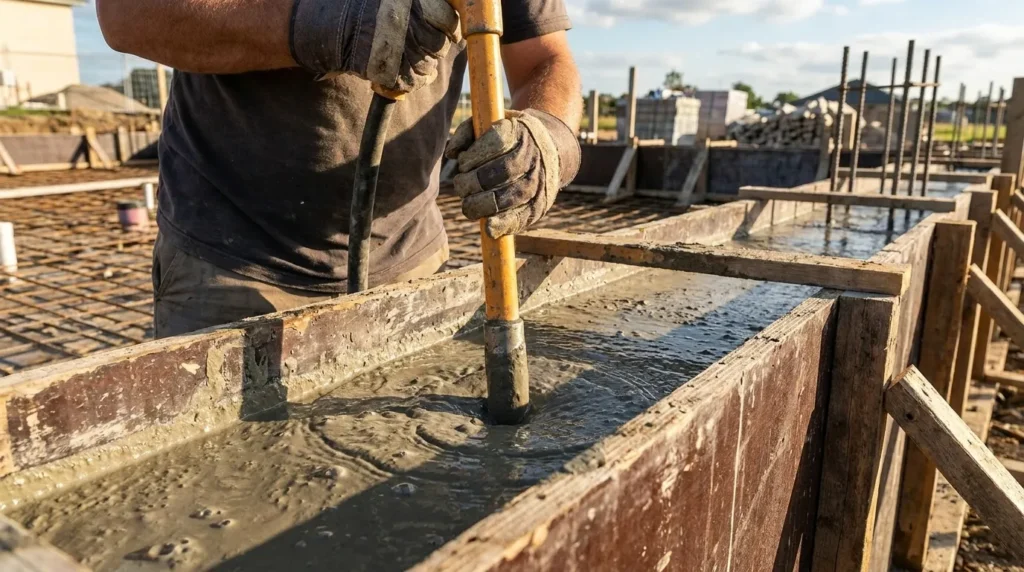
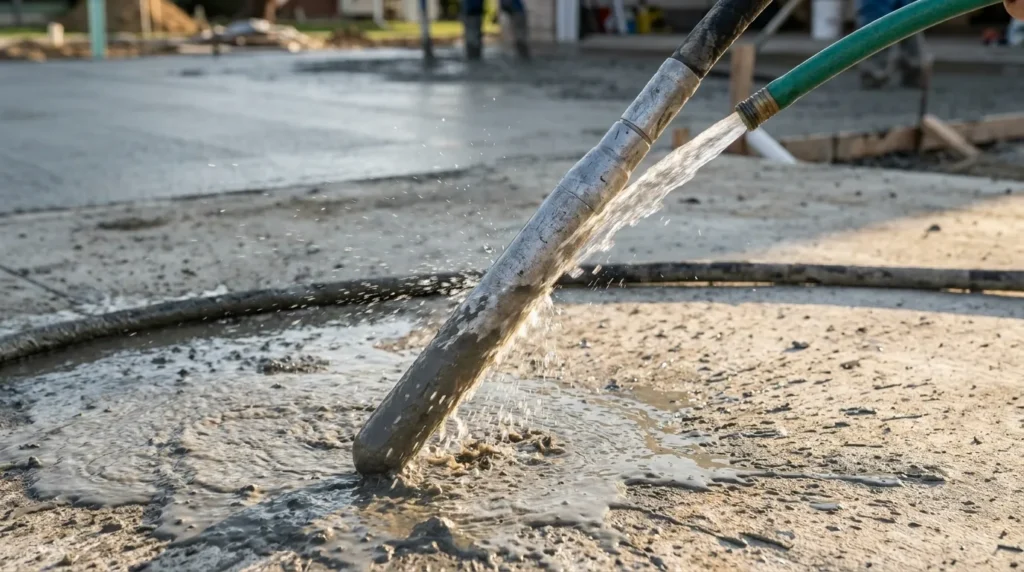
Insert the poker vertically (not at an angle) to the full depth of the pour — within 75–150mm of the bottom. Angled insertion creates consolidation in one direction while leaving adjacent concrete under-vibrated.
Insertion spacing: Move the poker at intervals of 1.5× the radius of action — typically 1.5× the figures in the sizing table above. Overlapping vibration zones slightly ensures complete coverage.
At formwork edges: Keep the poker minimum 75mm from any formwork face. Too close and the formwork vibrates rather than the concrete, causing form movement and a poor surface finish.
Worked Example — 10-yard Driveway Slab:
A 16 ft × 40 ft driveway, 5 inches thick. Using a 38mm poker (radius of action approximately 215mm). Insertion spacing: 1.5 × 215mm = 322mm (approximately 12–13 inches).
Grid of insertion points: every 13 inches across 16 feet = 14 points per row. Every 13 inches along 40 feet = 37 rows. Total insertions: approximately 518. At 5–8 seconds per insertion plus movement time: approximately 45–60 minutes of active vibration for the full slab. Plan the pour sequence so vibration follows immediately behind concrete placement.
Withdrawal Speed
Withdraw the poker slowly — approximately 75–100mm per second (3–4 inches per second). Pulling the poker out too quickly leaves a hole in the concrete that does not fully close — this void remains in the finished slab as a weak point.
Watch the concrete surface at the poker location as you withdraw. The surface should close smoothly behind the withdrawing poker. If a hole remains visible for more than 2–3 seconds, the concrete is too stiff (low slump) — check whether additional mixing water was added at the truck.
Common Mistakes That Damage Concrete
Over-vibration: Vibrating any single location for more than 15 seconds causes aggregate segregation — coarse aggregate sinks and paste rises to the surface, producing a weak stratified concrete rather than the uniform mix that was designed. Set a maximum dwell time of 5–15 seconds per insertion and move on.
Using vibration to move concrete: The vibrator is not a tool for spreading or placing concrete — it is a consolidation tool. Using it to push concrete across the slab instead of proper screeding causes segregation along the path of movement.
Vibrating against rebar: When the poker contacts reinforcement bars, the vibration transmits through the rebar and can displace adjacent concrete. Keep the poker clear of rebar — minimum 50mm clearance on all sides.
Not cleaning the poker immediately after use: Concrete begins to set within 30–90 minutes. A poker returned to the rental company with cured concrete on it may incur cleaning charges or damage claims. Rinse the poker, shaft, and any contacted surfaces with clean water immediately when vibration is complete.
Concrete Vibrator Rental Checklist — Before You Pick Up
Use this checklist to ensure you have everything you need before collecting the rental equipment:
BEFORE RENTING:
- [ ] Calculate your concrete volume — use our concrete calculator for accurate cubic yards
- [ ] Determine your pour depth (slab thickness or wall height)
- [ ] Check rebar spacing to determine maximum poker diameter
- [ ] Confirm power source availability (240V outlet within reach, or gasoline model needed)
- [ ] Book the rental in advance — vibrators are in high demand on weekend pour days
AT PICKUP:
- [ ] Inspect the poker head for damage — note any existing damage before leaving the shop
- [ ] Test the unit before loading — confirm it runs and vibrates at the correct frequency
- [ ] Confirm what accessories are included (shaft lengths, replacement poker, extension cord)
- [ ] Clarify the exact return time and return fuel level requirement for gasoline models
- [ ] Ask about the damage waiver and decide whether to add it
AT THE JOB SITE:
- [ ] Plan your insertion grid before the pour starts — mark spacing on the formwork if helpful
- [ ] Assign one person to operate the vibrator — vibration should be a dedicated role during the pour
- [ ] Keep spare fuel (gas models) or a spare charged battery (cordless models) on hand
- [ ] Clean the poker and shaft immediately when the pour is complete
AT RETURN:
- [ ] Return clean equipment at the agreed time
- [ ] Bring back all accessories that were issued
- [ ] Refuel gasoline models to the original level
Frequently Asked Questions
How much does it cost to rent a concrete vibrator?
Daily rental rates for a standard electric concrete vibrator (38–50mm poker) run $50–$80 per day in most US markets. Weekend rates (Friday to Monday) are typically $65–$100 for the same equipment — good value if your pour is on a Saturday. Gasoline models cost $65–$100 per day. Weekly rates are approximately 3–4× the daily rate.
Where can I rent a concrete vibrator?
National chains including United Rentals, Sunbelt Rentals, and Home Depot Tool Rental carry concrete vibrators at most locations. Local independent tool hire shops often offer lower rates and more flexibility. Online platforms like BigRentz and EquipmentShare allow price comparison across multiple suppliers in your market.
What size concrete vibrator do I need?
For most residential projects — driveways, patios, footings, residential walls — a 38mm (1.5-inch) poker with a 3–4m shaft covers the majority of applications. For walls with tight rebar spacing, a 28–35mm poker may be required. For large commercial slabs or mass concrete, a 50–60mm poker provides faster coverage with the same quality. See the sizing table in this guide for specific recommendations by application.
How long do I need to rent a concrete vibrator?
For a one-day pour (driveway, patio, or residential slab), a one-day rental is almost always adequate — a full day’s rental covers setup, the pour itself, and cleanup. For large commercial projects spanning multiple days, weekly rental rates offer better value than multiple day rentals.
Can I use a concrete vibrator on a small DIY pour?
Yes — and you should. Even small pours (post footings, small slabs, decorative concrete) benefit from vibration. A cordless 20V model is well-suited for small DIY applications — lightweight, no cords, easy to handle for a single operator. Rental cost for a cordless model is typically $30–$50/day.
What is the difference between renting electric vs gasoline concrete vibrators?
Electric models are quieter, lighter, and suitable for any location with a 240V power source. They are the practical choice for most residential and commercial pours where power is available. Gasoline models are independent of power supply — essential for remote sites — but are heavier, louder, and require fuel management. For enclosed or indoor pours, gas models require adequate ventilation.
Do I need to clean the concrete vibrator before returning it?
Yes — always. Return the equipment with all concrete residue removed from the poker, shaft, and body. Rinse with clean water immediately after use while the concrete is still fresh. Many rental companies charge a cleaning fee for equipment returned with cured concrete on it.
Is it better to rent or buy a concrete vibrator?
For homeowners and contractors who pour concrete fewer than 8–10 times per year, rental is almost always the better financial decision. The annualised cost of rental is lower than purchase plus maintenance until frequency of use exceeds approximately 10 pours per year for a comparable model.
Conclusion
Renting a concrete vibrator for the right duration, in the right size, from the right source is a straightforward decision once you know what you are looking for. Match the poker diameter to your rebar spacing and pour depth. Choose electric for any site with power, gasoline for remote work. Rent by the day for single pours, by the week for multi-day projects. Clean the equipment immediately after use. And calculate your concrete volumes accurately before the truck arrives — use the ConcreteCal free concrete calculator to confirm your cubic yards before ordering ready mix.
For a complete guide to concrete vibrator types, specifications, and how they work, see our overview post on types of concrete tools.