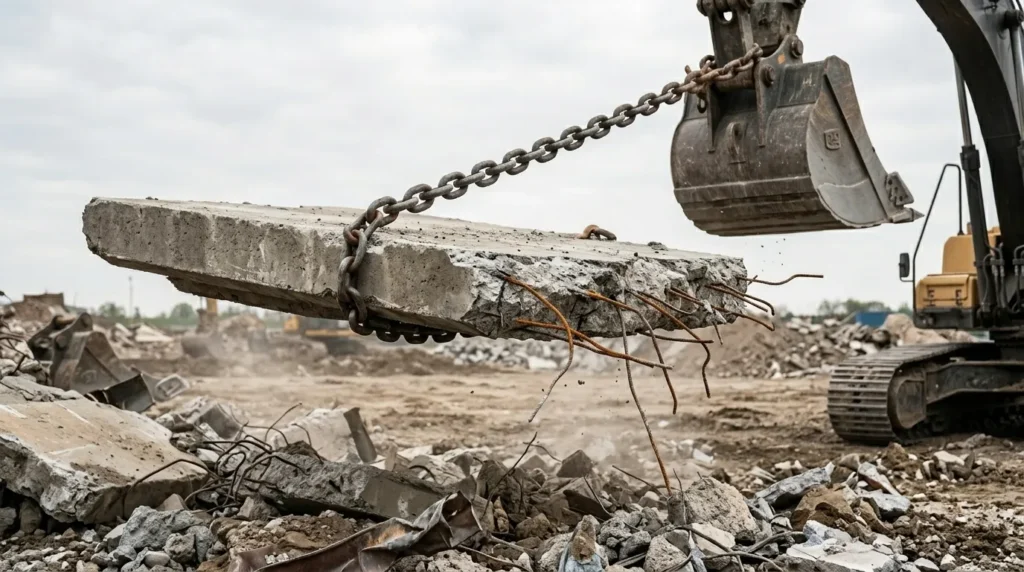

Concrete is deceptively heavy. A slab that looks manageable on paper can weigh several tons — enough to stress a structural floor, overwhelm a dumpster, or exceed a truck’s legal load limit. Knowing the weight before you pour, demo, or haul is not optional on a serious project.
A concrete weight calculator converts your slab or structure’s dimensions into an accurate weight — in pounds, kilograms, or tons — using the concrete’s density and your measured volume. Whether you’re calculating dead load for a structural engineer, sizing a dumpster for demolition debris, or just trying to understand what you’re dealing with, the math here gives you a reliable number fast.
This guide covers the full weight calculation method, density values for every concrete type, worked examples for common project shapes, and a complete FAQ based on the most searched questions about concrete weight.
Table of Contents
- What Is a Concrete Weight Calculator?
- Concrete Density — The Number Behind Every Weight Calculation
- Concrete Weight Formula — How to Calculate It
- Use Our Concrete Weight Calculator for Instant Results
- Concrete Weight by Shape and Project Type
- Factors That Affect Concrete Weight
- Why Concrete Weight Matters — Dead Load and Project Planning
- Frequently Asked Questions
What Is a Concrete Weight Calculator?
A concrete weight calculator takes three inputs — length, width, and thickness (or volume directly) — and multiplies them by the density of the concrete mix to produce a weight in your chosen unit.
The formula is simple. What varies is the density value, which changes depending on the mix type: standard structural concrete, lightweight concrete used in elevated slabs, or high-density concrete used in radiation shielding and counterweights.
Most calculators default to standard concrete at 150 lbs per cubic foot (2,400 kg/m³) — the value used by structural engineers for residential and commercial dead load calculations worldwide. If your project uses a specialty mix, that number changes, and so does your weight estimate.
The calculator is useful in three distinct scenarios:
- Structural planning — calculating dead load on a floor, beam, or foundation
- Demolition planning — estimating debris weight for dumpster sizing and hauling
- Material handling — knowing the weight of precast panels, blocks, or poured sections before lifting or transport
Concrete Density — The Number Behind Every Weight Calculation
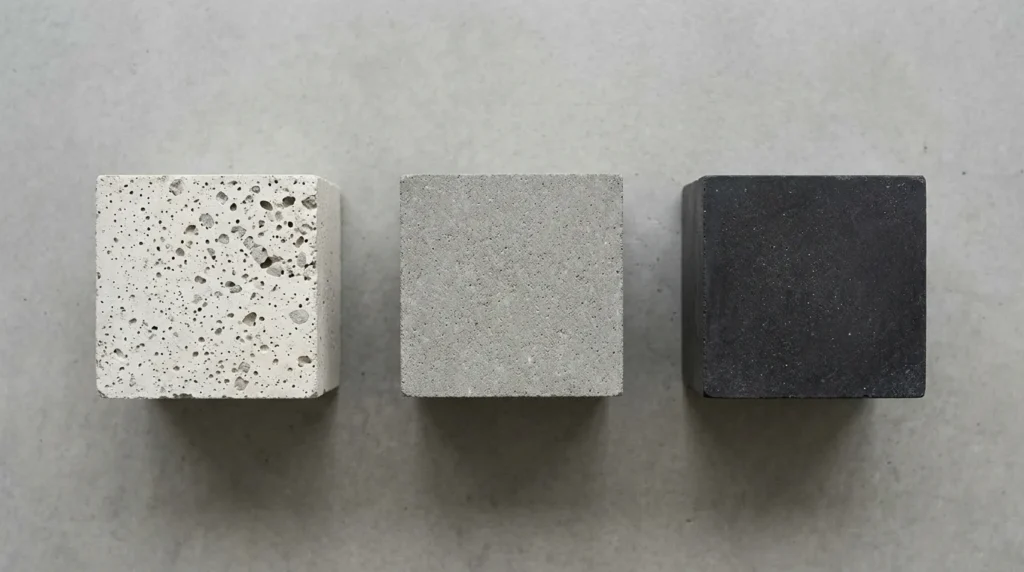
Density is the weight of concrete per unit volume. It’s the single variable that separates a rough guess from an accurate weight estimate.
Standard Concrete Density
Standard concrete — the mix used for slabs, driveways, garage floors, and most structural applications — has a density of:
- 150 lbs per cubic foot
- 4,050 lbs per cubic yard
- 2,400 kg per cubic meter
This value assumes a typical mix of Portland cement, sand, coarse aggregate (gravel or crushed stone), and water at a standard water-cement ratio. It’s the default used by the American Concrete Institute (ACI) for structural dead load calculations in residential and commercial construction.
Lightweight Concrete Density
Lightweight concrete substitutes normal aggregates with expanded shale, clay, or slate — reducing density while maintaining acceptable compressive strength.
- 85–115 lbs per cubic foot
- 1,360–1,840 kg per cubic meter
Common in elevated floor slabs, roof decks, and pre-cast panels where dead load reduction is a design priority.
High-Density Concrete Density
High-density (heavyweight) concrete uses dense aggregates like barite, magnetite, or steel shot to achieve significantly higher mass per unit volume.
- 190–250 lbs per cubic foot
- 3,040–4,000 kg per cubic meter
Used in nuclear shielding, counterweights, and specialized industrial applications. Rarely encountered in residential construction.
Concrete Density Quick Reference
| Concrete Type | lbs/ft³ | kg/m³ | Common Use |
|---|---|---|---|
| Lightweight | 85–115 | 1,360–1,840 | Elevated slabs, roof decks |
| Standard | 145–150 | 2,320–2,400 | Slabs, driveways, foundations |
| Heavy-weight | 190–250 | 3,040–4,000 | Radiation shielding, ballast |
Concrete Weight Formula — How to Calculate It
The core formula:
Weight = Volume × Density
Volume must be in cubic feet, cubic yards, or cubic meters — and density must match the same unit. Mix units and your answer will be wrong.
Weight Per Cubic Foot
1 ft³ × 150 lbs/ft³ = 150 lbs per cubic foot
This is the most practical unit for small pours and block calculations.
Worked Example: A concrete step measuring 3 ft long × 1 ft wide × 0.5 ft thick:
Volume: 3 × 1 × 0.5 = 1.5 ft³ Weight: 1.5 × 150 = 225 lbs
Weight Per Cubic Yard
1 yd³ = 27 ft³ 27 × 150 = 4,050 lbs per cubic yard (approximately 2 tons)
This is critical for demolition planning. A single yard of broken concrete fills a dumpster fast and approaches the weight limit of most standard roll-off containers.
Worked Example: A 10 ft × 12 ft driveway section at 4 inches thick being demolished:
Volume: 10 × 12 × (4÷12) ÷ 27 = 1.48 yd³ Weight: 1.48 × 4,050 = 5,994 lbs ≈ 3 tons
A standard 10-yard dumpster holds approximately 4,000–6,000 lbs of concrete. This section alone nearly fills one.
Weight Per Cubic Meter
1 m³ × 2,400 kg/m³ = 2,400 kg per cubic meter = approximately 2.4 metric tons
Used in engineering calculations outside the US and in most structural engineering software.
Worked Example: A 4 m × 5 m slab at 150 mm (0.15 m) thick:
Volume: 4 × 5 × 0.15 = 3 m³ Weight: 3 × 2,400 = 7,200 kg = 7.2 metric tons
Use Our Concrete Weight Calculator for Instant Results
Running the formula manually works for simple shapes. For irregular slabs, circular pads, or multi-section projects, the concrete weight calculator at ConcreteCalc handles the calculation in seconds — enter your dimensions, select your concrete type, choose your unit, and get weight in lbs, kg, and tons simultaneously.
The calculator is particularly useful when you need to:
- Switch between unit systems without re-calculating
- Compare standard vs. lightweight concrete weight for the same slab dimensions
- Calculate weight for multiple sections of a project in sequence
If you haven’t yet calculated your concrete volume, start with our Concrete Slab Calculator — it produces the cubic footage and yardage you need to feed directly into the weight formula.
Concrete Weight by Shape and Project Type
Rectangular Slab Weight
The most common calculation. Multiply length × width × thickness (all in feet) for cubic feet, then multiply by 150 lbs.
Quick Reference — Rectangular Slab Weights (Standard Concrete, 4″ thick):
| Slab Size | Volume (ft³) | Weight (lbs) | Weight (tons) |
|---|---|---|---|
| 4 ft × 4 ft | 5.3 | 800 | 0.4 |
| 8 ft × 8 ft | 21.3 | 3,200 | 1.6 |
| 10 ft × 10 ft | 33.3 | 5,000 | 2.5 |
| 10 ft × 20 ft | 66.7 | 10,000 | 5.0 |
| 12 ft × 24 ft | 96.0 | 14,400 | 7.2 |
| 20 ft × 30 ft | 200.0 | 30,000 | 15.0 |
Circular Slab Weight
For circular slabs or pads, use the circle area formula first:
Area = π × radius² Volume = Area × Thickness Weight = Volume × 150 lbs/ft³
Worked Example: A circular patio pad, 8 ft diameter (radius = 4 ft), 4 inches thick:
Area: 3.1416 × 4² = 50.27 ft² Volume: 50.27 × (4÷12) = 16.76 ft³ Weight: 16.76 × 150 = 2,513 lbs ≈ 1.26 tons
Footing and Foundation Weight
Footings are typically deeper than surface slabs — 12 to 24 inches — which significantly increases weight per linear foot.
Example — Perimeter footing, 40 linear feet, 12″ wide × 18″ deep:
Volume: 40 × (12÷12) × (18÷12) = 40 × 1 × 1.5 = 60 ft³ Weight: 60 × 150 = 9,000 lbs = 4.5 tons
For foundation weight calculations feeding into structural engineering reports, always use 150 lbs/ft³ unless your engineer specifies a different density for your mix design.
Concrete Block Weight
Standard concrete masonry units (CMUs) have published weights that vary by block size and core configuration.
| Block Size | Solid Weight | Hollow (Standard) Weight |
|---|---|---|
| 4″ × 8″ × 16″ | ~26 lbs | ~17 lbs |
| 6″ × 8″ × 16″ | ~36 lbs | ~24 lbs |
| 8″ × 8″ × 16″ | ~50 lbs | ~33 lbs |
| 12″ × 8″ × 16″ | ~74 lbs | ~50 lbs |
The standard 8″ × 8″ × 16″ hollow CMU at 33 lbs is the block most contractors refer to when they say “a standard concrete block.” Solid blocks of the same size weigh approximately 50 lbs — a significant difference for structural load calculations and manual handling.
Driveway and Wall Weight
Standard two-car driveway (16 ft × 40 ft, 5″ thick):
Volume: 16 × 40 × (5÷12) = 266.7 ft³ Weight: 266.7 × 150 = 40,000 lbs = 20 tons
Twenty tons of concrete. That’s four full dump truck loads of demolition debris if this driveway is ever broken out — a number that matters enormously for budgeting a removal project.
8″ masonry wall, 20 ft long × 8 ft high:
Volume (solid equivalent): 20 × 8 × (8÷12) = 106.7 ft³ Weight: 106.7 × 150 = 16,000 lbs = 8 tons
Hollow block walls weigh approximately 60–65% of this figure, depending on block core percentage.
Factors That Affect Concrete Weight
The standard 150 lbs/ft³ figure is an average. Real-world concrete weight varies based on several factors:
Aggregate type and density. Gravel and crushed stone aggregates vary in density. Heavier stone (basalt, granite) produces slightly heavier concrete than lighter aggregates (limestone, expanded shale). Coarse aggregate typically makes up 60–75% of concrete volume by mass.
Water content. Higher water-cement ratios add weight at the fresh stage but reduce it slightly as the concrete cures and water evaporates. Cured concrete is slightly lighter than freshly poured concrete.
Air content. Air-entrained concrete — specified for freeze-thaw climates — contains 4–8% entrained air by volume, reducing density by 5–10 lbs/ft³ compared to non-air-entrained mixes.
Reinforcement. Rebar adds weight that the concrete volume formula doesn’t capture. Steel density is approximately 490 lbs/ft³ — significantly heavier than concrete. For heavily reinforced structural elements, rebar can add 3–8% to the total weight. For most residential slabs, this is negligible for practical purposes.
Moisture condition. Saturated concrete (submerged or water-logged) weighs more than air-dry concrete. For demolition weight estimates, assume saturated density (155–160 lbs/ft³) if the slab has been exposed to moisture.
Why Concrete Weight Matters — Dead Load and Project Planning
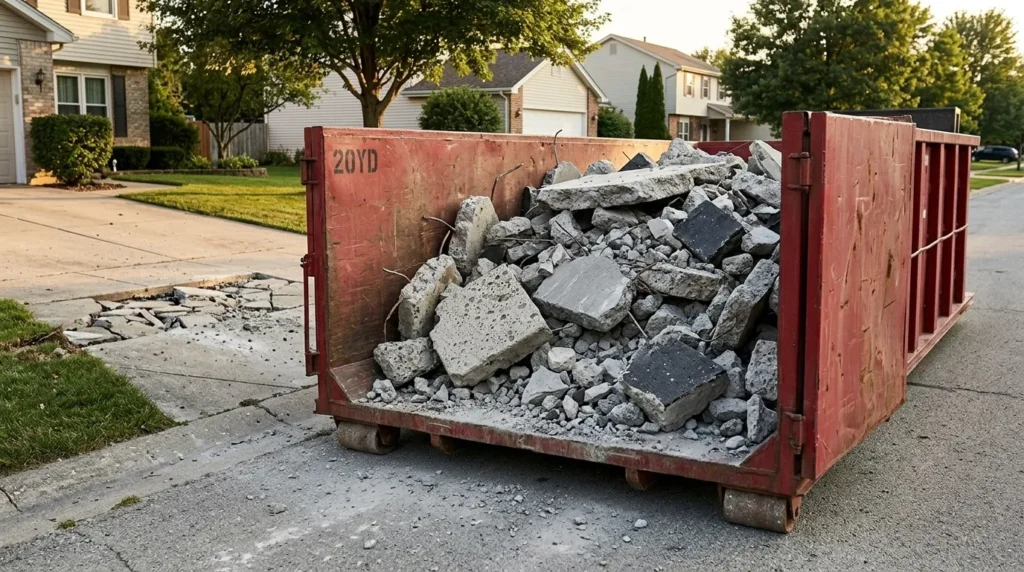
Weight is not just a curiosity — it directly affects structural safety, equipment selection, and project cost in ways volume alone cannot.
Structural dead load. Every floor, beam, and column must support the weight of the concrete above it. Structural engineers use concrete weight to calculate dead loads, which then determine reinforcement requirements, beam sizing, and foundation design. The standard dead load assumption for a 4-inch concrete slab is 50 lbs per square foot — a number derived directly from 150 lbs/ft³ × 0.333 ft thickness.
Demolition and debris hauling. Breaking out a concrete slab produces rubble at approximately the same weight as the original pour — sometimes slightly more due to trapped moisture and soil contamination. A 10-yard dumpster typically holds 4,000–6,000 lbs of concrete debris. Overloading a dumpster incurs overage charges ($50–$150 per ton above the limit) and can be a safety violation.
Equipment and crane load limits. Lifting precast concrete panels, steps, or structural elements requires knowing their exact weight before selecting lifting equipment. A crane or telehandler rated for 3 tons cannot safely lift a 4-ton precast wall panel — and the weight calculation is the only way to know the difference.
Transport and delivery. Ready-mix trucks carry 8–10 cubic yards — approximately 32,000–40,000 lbs of concrete. Legal road load limits in most US states cap single-axle loads at 20,000 lbs and gross vehicle weight at 80,000 lbs. Suppliers manage this automatically, but knowing the weight helps you understand why large pours require multiple truck deliveries.
For an in-depth look at how volume and weight connect in project planning, the Portland Cement Association publishes residential and commercial concrete design guides that cover dead load calculations, mix design, and structural planning in detail.
Frequently Asked Questions About Concrete Weight
How much does concrete weigh per cubic foot?
Standard concrete weighs 150 lbs per cubic foot (2,400 kg/m³). Lightweight concrete is 85–115 lbs/ft³. High-density concrete ranges from 190–250 lbs/ft³. Always confirm your mix type before using a density value.
How much does a cubic yard of concrete weigh?
One cubic yard of standard concrete weighs approximately 4,050 lbs — just over 2 tons. This is the most important weight figure for demolition planning and dumpster sizing, since ready-mix is ordered by the yard.
How much does a square foot of concrete weigh?
It depends on thickness. At 4 inches thick, one square foot of standard concrete weighs 50 lbs. At 6 inches thick: 75 lbs. At 8 inches thick: 100 lbs. Multiply by your slab area to get total weight.
How much does a slab of concrete weigh?
A typical 10×10 ft patio slab at 4 inches thick weighs approximately 5,000 lbs (2.5 tons). A 20×24 ft garage floor at 5 inches thick weighs approximately 22,500 lbs (11.25 tons). Use the worked examples above for your specific dimensions.
How much does 5 gallons of concrete weigh?
One gallon of standard concrete weighs approximately 20 lbs. Five gallons: approximately 100 lbs. This figure is useful for mixing small quantities in buckets for repairs or anchor bolt setting.
How many lbs in a yard of concrete?
Approximately 4,050 lbs per cubic yard for standard concrete. Some sources round to 4,000 lbs. For structural calculations, use 4,050 lbs (150 lbs/ft³ × 27 ft³/yd³) for accuracy.
What is the average weight of a standard concrete block?
A standard 8″ × 8″ × 16″ hollow CMU weighs approximately 33–35 lbs. A solid block of the same dimensions weighs approximately 50 lbs. Weights vary slightly by manufacturer and aggregate used.
How much does cement weigh per cubic foot?
Dry Portland cement (not mixed concrete) has a bulk density of approximately 94 lbs per cubic foot — which is why a standard 94 lb bag of cement equals one cubic foot of loose dry cement. Mixed into concrete, the cement component is much denser because it fills the voids between aggregate particles.
Does reinforcement (rebar) affect concrete weight significantly?
For residential slabs with standard rebar spacing, rebar adds roughly 3–5% to the total weight — often negligible for practical planning. For heavily reinforced structural beams or columns, rebar contribution should be calculated separately using steel density (490 lbs/ft³) and the rebar volume.
How accurate is a concrete weight calculator?
Within 2–5% for standard mixes on typical projects. Accuracy decreases if your mix uses non-standard aggregates, high air content, or unusual water-cement ratios. For structural engineering purposes, always confirm density with your mix design specification.
Conclusion
Concrete weight follows directly from volume and density — two numbers you can calculate in under a minute with accurate dimensions. Use 150 lbs/ft³ for standard mixes, adjust for lightweight or heavyweight concrete when specified, and always account for reinforcement and moisture when the weight figure will be used for structural or hauling decisions. The concrete calculator runs all of this instantly — enter your dimensions and get lbs, kg, and tons in one result.